
Medik8
Advanced Pro-Collagen+ Peptide Cream
moisturizer · 50 ml · 56 ingredients
- Fragrance-free
- No essential oils
- With peptides
- With vitamin c
- With ceramides
Full ingredient lists, decoded. Free-from facts on every product.
Shop by need · Mature skin
471 products in our library pass every rule for mature skin. The best of each type are below, picked by code from their full ingredient lists and updated November 6, 2026.
The catch: a product can suit you by its ingredient list and still not suit your skin, so patch test anything new and see a doctor if a problem doesn't settle.
Mature skin often suits a few helpful ingredients near the top of the list, such as vitamin C, hyaluronic acid and ceramides. Ingredients are listed from highest amount to lowest, down to about 1%, so the early names matter most. Every product on this page was picked from its full ingredient list, the standard label list known as INCI.
Medik8
moisturizer · 50 ml · 56 ingredients

The Inkey List
moisturizer · 50 ml · 22 ingredients
Caudalie
moisturizer · 50 ml · 29 ingredients

Beauty of Joseon
moisturizer · 100 ml · 37 ingredients
Anua
serum · 30 ml · 45 ingredients

Olay
serum · 50 ml · 26 ingredients

Anua
serum · 30 ml · 35 ingredients

Medik8
serum · 30 ml · 33 ingredients

Paula's Choice
retinol serum · 30 ml · 67 ingredients

The Inkey List
retinol serum · 30 ml · 30 ingredients

Medik8
retinol serum · 50 ml · 68 ingredients

CeraVe
retinol serum · 30 ml · 39 ingredients
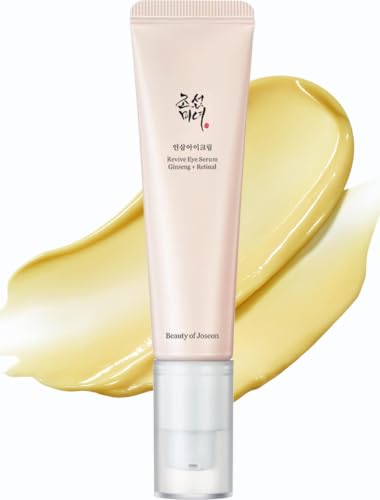
Beauty of Joseon
eye cream · 30 ml · 36 ingredients

Beauty of Joseon
eye cream · 35 ingredients

Medik8
eye cream · 15 ml · 41 ingredients

CeraVe
eye cream · 14 ml · 41 ingredients
Don't let the word 'unscented' settle it on its own. It can still contain a masking fragrance, added to hide the smell of other ingredients. 'Fragrance-free' means no added fragrance, but only the full ingredient list proves it. Patch test anything new: apply a little to a small area, such as inside the elbow, for several days before using it all over.
Start by reading the list. Ingredients are listed from the highest amount to the lowest, down to about 1%, so the first few names tell you what the product is mostly made of. Below that point the order is free. Look for ceramides, which are skin-identical lipids (fats the skin already makes) that help hold the skin barrier (the outer protective layer) together.
Before using anything new across your face, apply a little to a small area, such as inside the elbow. Leave it there for several days. Only then should you use the product all over. Retinoids are vitamin A forms that speed cell turnover, the rate at which skin renews itself, and they are used for lines, texture and breakouts.
Pick a moisturizer that lists ceramides or hyaluronic acid, a humectant that pulls water into the top layer of skin. Then read the front label with care. "Fragrance-free" means no added fragrance, but only the full ingredient list proves it.
Picks are chosen by reading each full ingredient list, the standard list on the label. Each pick must pass every rule, and products with more helpful ingredients rank higher. No brand gets more than two picks. Each list is dated and sourced from the brand's own page or Open Beauty Facts.
Retinoids, which are forms of vitamin A, speed cell turnover for lines, texture and breakouts. Peptides are signal ingredients used in firming formulas. Vitamin C brightens and evens tone. Ceramides help hold the skin barrier together, and niacinamide helps with oil, redness and uneven tone.
Ingredients are listed from the highest amount to the lowest, down to about 1%. Below that, the order is free. Look near the top for helpful ingredients, such as hyaluronic acid, which pulls water into the top layer of skin.
Yes. Patch test anything new by applying a little to a small area, such as inside the elbow, for several days. Only then should you use it all over. This helps you see how your skin reacts before you commit to a full routine.