UV Nail Lamps & Skin Cancer Risk: What the Research Says
The short answer
UV nail lamps emit UVA radiation that causes DNA damage in skin cells.
What Are UV Nail Lamps and How Do They Work?
UV nail lamps — also sold as nail dryers or gel curing lights — are devices used in salons and at home to harden (cure) gel nail polish. The UV or visible-light spectrum triggers photoinitiators in the gel formula, cross-linking the polymer chains and transforming the polish from liquid to a hard, glossy finish in seconds to minutes.
Two lamp types dominate the market:
| Type | Wavelength range | Curing time per coat | UV dose per session |
|---|---|---|---|
| Fluorescent UV lamp | 340–395 nm (mostly UVA) | 2–3 minutes | Higher |
| LED lamp | 395–405 nm (near-UV/violet) | 30–60 seconds | Lower |
Both emit UVA-range radiation. LED lamps cure faster — delivering a meaningfully smaller total UV dose per session — which is the primary practical advantage for safety-conscious users. The American Academy of Dermatology recommends LED over UV fluorescent lamps for this reason.
Why UVA Radiation Matters for Skin Health
Not all UV light is equal. The solar UV spectrum reaching ground level divides into:
- UVB (280–315 nm): High energy, causes sunburn, is the primary driver of direct DNA damage and melanoma.
- UVA (315–400 nm): Lower energy, penetrates more deeply into the dermis, does not cause sunburn readily, but generates reactive oxygen species (ROS) and oxidative DNA damage. UVA is the dominant spectrum from UV nail lamps.
UVA has long been associated with photoaging, immunosuppression, and — through oxidative mutagenesis — squamous cell carcinoma. Because UVA does not cause the immediate visible pain of sunburn, repeated exposure tends to be underestimated as a risk.
The hands are UVA-exposed areas that receive relatively little protective screening from natural pigmentation compared with sun-exposed facial skin. The dorsum (back) of the hand — the surface most directly facing a nail lamp — is therefore a site of concern for cumulative UV dose accumulation.
What the Laboratory Evidence Shows
The 2023 Nature Communications Study
The most rigorous laboratory investigation to date was published in Nature Communications (January 2023) by researchers at the UC San Diego Moores Cancer Center. They exposed adult human skin keratinocytes, human foreskin fibroblasts, and mouse embryonic fibroblasts to a commercial UV nail polish dryer using standardised irradiation protocols.
Key findings:
- Cell death: A single 20-minute session killed 20–30% of exposed cells. Three consecutive 20-minute sessions killed 65–70% of cells.
- DNA damage: Surviving cells showed elevated markers of DNA damage, including 8-oxo-7,8-dihydroguanine lesions — a hallmark of oxidative DNA modification.
- Mutation patterns: The somatic mutations that appeared in surviving cells showed a dose-dependent increase in C:G>A:T substitutions — a mutation signature associated with reactive oxygen species and observed in skin cancers in humans.
- Mitochondrial dysfunction: Oxidative stress extended beyond nuclear DNA to mitochondrial damage.
The authors noted that their findings "are consistent with those seen in melanoma and non-melanoma skin cancers" and called for additional epidemiological studies.
Critical limitation: All findings were from cell cultures, not living tissue. Human skin has a stratum corneum and multiple cellular layers that attenuate UV penetration in ways a cell-culture dish does not replicate. In vitro results establish biological plausibility for harm, not confirmed human risk at typical exposure levels.
The 2023 Scientific Reports Follow-Up
A separate study published in Scientific Reports (December 2023) examined keratinocyte viability at more clinically representative exposure times:
- After 4 minutes of UV nail lamp exposure: cell viability decreased by an insignificant margin.
- After 20 minutes of exposure: cell viability decreased by 35%.
- Cells pre-treated with SPF 50 sunscreen showed significantly better viability than unprotected cells at both time points.
This study suggests that standard session lengths (typically 2–4 minutes per coat, repeated 2–3 times) are considerably less damaging than the 20-minute protocol used in the Nature Communications study, and that sunscreen provides measurable protection.
What the Clinical Case Reports Show
While population-level epidemiological data remain sparse, a pattern of case reports warrants attention:
2009 case series: Two otherwise healthy women developed squamous cell carcinoma on their hands. Both had extensive histories of UV nail lamp use and lacked other conventional SCC risk factors for their hand dorsa. This was among the first clinical signals published in the literature.
2019 case report (PMC6873006): A 52-year-old Caucasian woman with an 18-year history of gel manicures (UV lamp, every 3 weeks) and concurrent tanning bed use presented with more than 25 actinic keratoses and two SCC in situ exclusively on her dorsal hands. She had no precancers or cancers anywhere else on her body and no prior skin cancer history.
2024 case report (PMC11551247): A young woman with no conventional SCC risk factors developed squamous cell carcinoma in an area directly exposed to nail-curing lamps. The authors noted that while a declared causal relationship could not be formally asserted, the clinical picture was "highly suggestive" given the lack of other risk factors and the tumor's location.
These are case reports, not controlled trials. Confounding factors — particularly concurrent tanning bed use in some patients — limit causal attribution. However, the anatomical specificity (lesions restricted to UV-lamp-exposed hand surfaces) is notable.
What a 2025 Systematic Review Concluded
A scoping review published in the International Journal of Dermatology (2025), synthesising 17 eligible studies and case reports from an initial search of PubMed, Scopus, and CINAHL, reached these conclusions:
- A direct causal link between UV nail lamps and carcinoma development has not been conclusively established.
- Most commercial lamps emit UVA levels within safety guidelines when used correctly, but some devices produced radiation exceeding occupational safety thresholds in under 10 minutes.
- Mathematical modeling estimated that between 8 and 208 sessions would be required to reach the UVA dose threshold associated with increased keratinocyte carcinoma risk — a range reflecting uncertainty in individual lamp output and skin sensitivity.
- Current evidence is "insufficient to support the mandatory implementation of protective measures" — but researchers note that fewer than 3% of users voluntarily take precautions despite the evidence base for simple protective measures.
- A survey found that 82% of respondents said they would not have a gel manicure if they were better informed of the risks.
Understanding the Risk in Context
UV nail lamps are not equivalent to tanning beds, and the absolute risk from occasional gel manicures is considered low by most researchers. Context matters:
Frequency and cumulative dose are the operative variables. Someone who gets a gel manicure once a year is in a categorically different risk position from someone who gets one every three weeks for twenty years — and who also uses tanning beds.
Existing risk factors matter. People with fair skin (Fitzpatrick Types I–II), a personal or family history of skin cancer, prior significant sun damage to the hands, immunosuppression, or concurrent tanning bed use face a more clinically significant risk-benefit calculation than a person with none of these factors.
"Low absolute risk" is not "zero risk," particularly for the hands — an area that does not commonly receive the regular dermatological screening that the face and scalp do.
Who Is Most at Risk
- People with Fitzpatrick skin Types I–II (very fair, burns easily, rarely tans)
- Anyone with a personal or family history of squamous cell carcinoma or actinic keratoses
- People who also use tanning beds (additive UVA dose)
- Individuals with immunosuppression (organ transplant recipients, people on immunosuppressive medication) — UV-related SCC risk is substantially higher in this group
- Nail technicians and salon workers with occupational chronic exposure across multiple clients daily
Practical Risk Reduction
The evidence supports several simple measures that materially reduce UV dose without requiring avoidance of gel manicures:
1. Choose an LED lamp over a UV fluorescent lamp
LED lamps cure gel polish in 30–60 seconds per coat versus 2–3 minutes for fluorescent UV lamps. Because UV dose is a product of intensity × time, faster curing means a meaningfully lower cumulative UVA dose per session. The AAD specifically recommends requesting LED over UV at the salon.
2. Apply broad-spectrum SPF 30+ sunscreen before your appointment
Apply sunscreen to the hands and forearms at least 30 minutes before UV lamp exposure to allow full absorption. The 2023 Scientific Reports study confirmed sunscreen provides measurable protection against UV-lamp-induced cell damage. Researchers from the PMC11844919 analysis similarly recommend this as the primary mitigation step.
3. Consider UV-protective fingerless gloves
Fingerless manicure gloves expose only the nails while shielding the dorsal hand skin from UV exposure. These are available commercially and are the most complete mechanical protection short of avoidance.
4. Apply sunscreen immediately around the nail beds
For people who prefer not to use gloves, applying sunscreen to the skin immediately surrounding the nails (avoiding the nail plate itself, which would interfere with adhesion) adds a localised UV barrier.
5. Moderate frequency
Once every 3 weeks at minimum, as needed for fills, is standard gel maintenance. Reducing frequency, or alternating with non-UV regular polish, reduces cumulative dose proportionally.
6. Monitor your hands
The dorsal hands, periungual (around the nail) skin, and fingertip skin are the areas most directly exposed. Any new lesion in these locations — a persistent scaly patch, a rough area that does not resolve, a growing or bleeding spot — warrants prompt dermatological review.
UV Nail Lamps vs. Tanning Beds: Not the Same Risk
Tanning beds are classified as Group 1 carcinogens by the International Agency for Research on Cancer (IARC) and are strongly associated with melanoma and squamous cell carcinoma. UV nail lamps and tanning beds are not directly comparable:
- A tanning bed exposes the entire body surface to UVA/UVB at high intensity for 10–20 minutes.
- A UV nail lamp exposes a small area (the hands) to UVA for a much shorter cumulative time per session.
The biological mechanisms are similar, but the dose delivered to any given area of skin is substantially lower with nail lamps. The comparison is worth making because it contextualises the risk — moderate, not trivial — and because some published case reports involve patients who used both.
The Bottom Line on Current Evidence
The honest summary of where the science stands in 2026:
- In vitro: UV nail lamps cause DNA damage and mutations in human skin cells consistent with cancer-initiating changes — well established.
- Case reports: Multiple published cases link long-term repeated UV lamp exposure to squamous cell carcinoma and actinic keratoses on the hands — suggestive but not proof of causation.
- Epidemiology: Large prospective studies in humans are lacking. No definitive causal link has been established at the population level.
- Risk is real but modifiable. The combination of LED over fluorescent UV, sunscreen, and moderate frequency substantially reduces whatever risk exists.
For most healthy adults who get occasional gel manicures, current evidence does not support alarm — but it does support awareness, simple precautions, and monitoring the skin of the hands as part of regular self-examination.
Products that fit this guide
Picked by code from each product's full ingredient list.

Sally Hansen
Sally Hans Sally Hansen Complete Care 7-in-1 Nail Treatment Strengthener Clear
nail treatment · 13.3 ml · 33 ingredients
- Fragrance-free
- No essential oils
- With glycerin
- With retinoids
- With vitamin c
Catrice
Aura Glam Nail Polish
nail polish · 10.5 ml · 22 ingredients
- Fragrance-free
- No essential oils
- With titanium dioxide
Catrice
Base & Top Coat Allround 2-in-1
nail polish · 10.5 ml · 10 ingredients
- Fragrance-free
- No essential oils
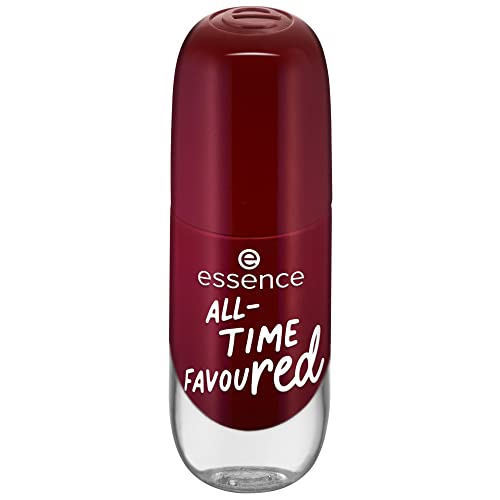
Essence
Gel Nail Colour
nail polish · 8 ml · 9 ingredients
- Fragrance-free
- No essential oils
When to see a professional
See a dermatologist promptly if you notice any new, persistent, or changing lesion on the dorsal hands, fingers, or periungual skin — particularly a rough scaly patch that does not heal within a few weeks, a growing firm bump, or a spot that bleeds without trauma. People with a history of actinic keratoses or squamous cell carcinoma, those on immunosuppressive medication, or anyone with very fair skin and a long history of regular gel manicures should discuss UV nail lamp exposure with their dermatologist and consider annual or biannual hand skin checks.
Frequently asked questions
Is there conclusive proof that UV nail lamps cause skin cancer in 2026?
No direct causal link has been conclusively established in living humans as of 2026. A 2025 scoping review synthesising 17 studies concluded that while laboratory (in vitro) evidence demonstrates DNA damage and mutation patterns consistent with carcinogenesis, and case reports document squamous cell carcinoma in patients with long histories of UV lamp use, a definitive epidemiological causal link is not yet proven. Importantly, 'not yet proven' does not mean the risk is zero — and several published case reports are anatomically specific enough to be concerning.
Should I stop getting gel manicures because of UV lamp risk?
Most researchers and dermatologists do not call for complete avoidance for healthy adults getting occasional gel manicures. The risk is considered low-to-moderate at typical frequencies. The practical approach is to use simple protective measures: choose a salon with LED curing lamps (lower dose than fluorescent UV), apply SPF 30+ sunscreen to your hands at least 30 minutes before the appointment, and consider UV-protective fingerless gloves if you are fair-skinned or have a personal or family history of skin cancer.
Are LED nail lamps safer than UV nail lamps?
LED lamps are meaningfully lower-risk than traditional fluorescent UV lamps. They emit at 395–405 nm (near-UV/violet), cure in 30–60 seconds per coat compared to 2–3 minutes for fluorescent UV, and deliver a substantially lower total UVA dose per session. The American Academy of Dermatology specifically advises choosing salons that use LED curing lights over UV lamps for this reason.
Who should be most cautious about UV nail lamp exposure?
People with the highest legitimate concern include: those with Fitzpatrick skin Types I–II (very fair, prone to burning); anyone with a personal or family history of squamous cell carcinoma or actinic keratoses; people who also use tanning beds (additive UVA exposure); immunosuppressed individuals (organ transplant recipients, people on immunosuppressive drugs) — this group has substantially higher baseline UV-related skin cancer risk; and nail technicians with occupational chronic exposure to multiple UV lamp sessions daily. These individuals should use protective measures consistently.
Does sunscreen protect against UV nail lamp radiation?
Yes — measurably so. A 2023 study in Scientific Reports found that cells pre-treated with SPF 50 sunscreen showed significantly better viability than unprotected cells after UV lamp exposure at both 4-minute and 20-minute time points. Researchers analysing UV nail lamp safety advise applying broad-spectrum SPF 30+ at least 30 minutes before exposure. Choose a broad-spectrum product that specifically covers UVA (look for UVA-PF or PA+++ ratings alongside the SPF number).
How many gel manicure sessions would it take to increase cancer risk?
Mathematical modeling in the literature estimated that between 8 and 208 UV nail lamp sessions would be needed to reach the UVA dose threshold associated with increased risk of keratinocyte carcinoma — a wide range reflecting differences in individual lamp output, session length, and skin sensitivity. This translates roughly to 2 to 52 years of monthly gel manicures, assuming standard session lengths. The wide range reflects genuine uncertainty in the data; it should not be read as a clearance, but it contextualises the risk as cumulative rather than acute.
Health information, not medical advice.
Beauty Comparison is an independent editorial publication. This page is researched and sourced to the authorities listed below, but it is general information — not a diagnosis or a substitute for personalised advice from a qualified doctor, dermatologist or pharmacist. If your symptoms are severe, spreading, painful, or not improving, see a healthcare professional.Sources
- 01DNA damage and somatic mutations in mammalian cells after irradiation with a nail polish dryer — Nature Communications (UC San Diego / PubMed Central), 2023-01-17. Single 20-minute UV nail lamp session caused 20–30% cell death and DNA mutations (C:G>A:T substitutions) in human keratinocytes and fibroblasts; three sessions killed 65–70% of exposed cells; mutation patterns consistent with skin cancer in humans.
- 02Assessing the Health Implications of UV/LED Nail Lamp Radiation Exposure During Manicure and Pedicure Procedures: A Scoping Review — PubMed Central / International Journal of Dermatology, 2025-02-01. Systematic review of 17 studies concluded no conclusive causal link between UV nail lamps and skin cancer in humans; 8–208 sessions estimated to reach keratinocyte carcinoma risk threshold; most lamps comply with safety guidelines; SPF 30+ sunscreen recommended before exposure.
- 03Safety information and adverse event profiles of ultraviolet nail lamps: a commercial website analysis — PubMed Central, 2025-02-01. Only 0.7% of 563 UV nail lamp products analyzed provided safety information; UV exposure for up to 4 minutes per session carries low risk of cutaneous malignancy; applying SPF 30+ at least 30 minutes before treatment recommended; 82% of surveyed users stated they would not undergo gel manicure if informed of risks.
- 04Multiple Dorsal Hand Actinic Keratoses and Squamous Cell Carcinomas: A Unique Presentation following Extensive UV Nail Lamp Use — PubMed Central / Case Reports in Dermatology, 2019-11-01. Case report documenting a 52-year-old woman with 18-year history of gel manicures (UV lamp every 3 weeks) who developed >25 actinic keratoses and two SCC in situ exclusively on her dorsal hands, with no precancers or cancers elsewhere.
- 05Squamous cell carcinoma of the nail unit after repeated UV nail lamp exposure — PubMed Central, 2024-11-01. Case report of squamous cell carcinoma in a young woman without conventional SCC risk factors in an area directly exposed to nail-curing lamps; authors described the association as 'highly suggestive.'
- 06Artificial nails: Dermatologists' tips for reducing nail damage — American Academy of Dermatology (aad.org). AAD recommends choosing LED over UV curing lamps because LED emits lower UV radiation and cures faster, reducing overall UV exposure; gel manicures can cause nail brittleness and repeated use increases skin cancer and premature aging risk on the hands.
- 07Influence of UV nail lamps radiation on human keratinocytes viability — Scientific Reports (Nature Portfolio), 2023-12-01. 4-minute UV nail lamp exposure caused insignificant cell viability decrease; 20-minute exposure caused 35% cell viability decrease; SPF 50 sunscreen significantly improved cell survival at both time points — confirming sunscreen as a practical protective measure.