How & When to Reapply Sunscreen Over Makeup
The short answer
Reapply sunscreen every two hours outdoors.
Why Reapplication Is Not Optional
The SPF number on a sunscreen label describes the ratio of UV energy needed to produce sunburn on protected skin versus unprotected skin — not how long the product lasts. An SPF 50 does not protect you for 50 hours or for any fixed duration. Every sunscreen degrades under UV exposure, through perspiration, sebum migration, and physical contact (touching the face, phone screens, masks).
The American Academy of Dermatology's position is unambiguous: reapply every two hours of outdoor sun exposure, and immediately after swimming or sweating. Research confirms that up to 85% of sunscreen can be removed by towel-drying. Regular daily activity removes measurably less per hour but accumulates into significant protection loss across a day outdoors.
The challenge for those wearing makeup is purely practical. Rubbing in a conventional lotion sunscreen over a full face of makeup destroys the look. The solution is choosing the right delivery format.
The Three Makeup-Safe Reapplication Methods
1. SPF Setting Powder
SPF setting powders are the most widely recommended option by dermatologists for over-makeup reapplication. They contain micronized mineral filters — zinc oxide and/or titanium dioxide — in a pressed or loose powder base.
How to apply: Load a large, soft, fluffy brush (a powder brush or fan brush, not a dense contour brush). Tap off excess product to prevent fallout. Apply in light, layered sweeps across the entire face — including forehead, nose, chin, temples, and jaw. Avoid single heavy passes that disturb the makeup underneath.
Limitations: A brush application cannot replicate the even film formed by a correctly applied liquid or cream SPF. SPF powders provide a meaningful boost to protection, particularly in high-exposure conditions, but they are not a substitute for a properly applied morning base SPF of at least ¼ teaspoon. The coverage they add is partially dependent on loading — light sweeps add less SPF than thorough buffing passes.
Best for: Any makeup look, any skin type. Powders also serve a mattifying function on oily skin, making this an especially practical two-in-one choice.
2. SPF Facial Mist or Setting Spray
SPF mists and sprays dispense a fine film of liquid sunscreen actives without the mechanical disruption of rubbing. The key is in the application technique.
How to apply: Hold the bottle 6–8 inches (15–20 cm) from the face. Spray in a sweeping motion, aiming for even coverage — do not concentrate on one spot. Allow the mist to land on the skin without rubbing it in. Optionally, use a clean dry makeup sponge to gently press (not drag) the mist into skin to ensure adhesion and avoid an over-wet finish that could cause makeup to slip.
Limitations: Mists are harder to control for even coverage than powders. Gaps are more likely, particularly in curved zones like the nose tip or around the nostrils. They may also cause makeup to move slightly if applied too heavily.
Best for: Light to medium makeup looks (tinted moisturizer, BB cream, light foundation). Less suited to heavy full-coverage foundations where the addition of moisture can cause slippage.
3. Cushion Compact with SPF
Cushion compacts dispense liquid or cream formula through a sponge applicator, delivering coverage and SPF in a single portable product. They apply in a dabbing, pressing motion — not rubbing — which is more makeup-friendly than a squeeze bottle.
How to apply: Press the applicator sponge into the cushion, then dab onto the face in gentle pressing motions from center outward. Pat edges to blend. The sponge should carry product to the skin rather than dragging across it.
Best for: Dewy or natural-finish makeup looks; those who want to touch up coverage and SPF simultaneously; those traveling or working in hot, humid environments where makeup has shifted.
What Doesn't Work: Common Reapplication Mistakes
Applying Lotion Sunscreen Over Makeup
Rubbing any liquid or lotion sunscreen into skin over a full makeup application inevitably disrupts the base. It also makes it harder to apply with the even film needed for labeled SPF — resulting in patchy coverage and a compromised makeup look.
Layering Two SPF Products to Increase Protection
A common misconception: applying SPF 30 powder over an SPF 50 foundation over an SPF 30 moisturizer does not add up to SPF 110. You receive the protection of the highest-SPF product used, not the mathematical sum. Each layer can help close coverage gaps, but the benefit is consistent coverage — not compounded SPF.
Using SPF Powder as Your Only Morning SPF
SPF setting powders should be the second or third layer — not the first. The mineral SPF in powders provides meaningful reapplication support, but the film formed by a brushed-on powder cannot match the even, continuous film produced by a properly applied liquid or cream formula as a base. Use a dedicated SPF base first; then use powder on top.
Forgetting to Reapply After Masking
Facial masks (sheet masks, clay masks, leave-on patches) used during outdoor activities (festivals, beach days) effectively remove the sunscreen beneath them. Reapply after any mask is removed.
The Morning Routine: Setting Up for Successful Reapplication
Reapplication is most effective when the base is right:
- Apply sunscreen as the last skincare step, before makeup. The correct order: cleanser → toner/serum → moisturizer → sunscreen → (wait) → primer (optional) → makeup.
- Use enough. Most people apply 25–50% of the recommended dose. For the face alone, ¼ teaspoon (approximately 1.5 mL or two to three finger lengths) is the target.
- Do not mix sunscreen into foundation or moisturizer. Mixing dilutes the sunscreen concentration and disrupts the protective film — you get less of each product's benefit.
- Allow sunscreen to set. Give it 5–10 minutes to dry before applying makeup. This prevents the film from being wiped away by subsequent product application.
Special Scenarios
Exercising Outdoors
Sweat degrades sunscreen faster than UV alone. For physical activity, begin with a water-resistant SPF (water-resistant formulas are tested to retain SPF after 40 or 80 minutes of water immersion — the FDA's two permitted claims). Reapply as soon as you stop sweating heavily, and every two hours of continued outdoor exposure regardless.
Prolonged Outdoor Days (Beach, Sport Events, Festivals)
Carry a powder SPF compact or travel-sized SPF spray. Set calendar reminders every two hours. If you will swim, prioritize a physical water-resistant mineral formula as the base.
Overcast or Cloudy Days
UV protection is needed regardless of visible sun. Up to 80% of UV rays penetrate cloud cover. The reapplication schedule does not change.
Driving
UVA rays (the primary cause of photoaging and a contributor to skin cancer) penetrate standard car glass. Side windows typically offer less UV protection than windshields, which in the US are required to have UV-blocking laminate. Apply SPF before driving and reapply if you are in the car for extended periods with the windows down or in a vehicle with minimal UV-blocking glass.
Product Selection Tips
When shopping for reapplication products:
- SPF powder: Look for a mineral SPF (zinc oxide or titanium dioxide) labeled on the active ingredients. Products that list SPF in the active ingredients section are regulated as drugs and must meet FDA efficacy standards — products that merely mention SPF in marketing copy are not held to the same standard.
- SPF mist: Same active ingredient check. Verify the listed SPF value (30 minimum for meaningful daily protection).
- All formats: Broad-spectrum labeling is mandatory for any product making a UVA protection claim — verify the "broad-spectrum" label is present.
See the full Sunscreen Guide for how to read labels and choose your morning base SPF.
Step by step
- 1
Complete your morning skincare and base SPF
Apply your base sunscreen (SPF 30+, broad-spectrum) as the last skincare step, before any makeup. Use at least ¼ teaspoon (roughly 1.5 mL) for the face, neck, and ears. Allow 15 minutes before sun exposure for the film to set properly.
- 2
Apply makeup as normal
Apply foundation, concealer, and any other products on top of the dried sunscreen. Do not mix sunscreen into foundation — this dilutes both products and disrupts the even sunscreen film. Keep the order: SPF → primer (optional) → foundation.
- 3
Set makeup with a finishing powder
Use a loose or pressed finishing powder — ideally one containing a mineral SPF — as your final makeup step. This step doubles as the first layer of reapplication support and sets the base for easier midday touch-ups.
- 4
Track two hours of sun exposure
The two-hour reapplication clock starts when you are outdoors under UV exposure, not from application time. Cloud cover does not pause the clock — up to 80% of UV rays penetrate overcast skies. Set a phone reminder if you tend to lose track.
- 5
Choose your reapplication tool
Select one of three methods based on what you have: (A) SPF setting powder: load a large fluffy brush, tap off excess, and sweep over the face in light, layered passes; (B) SPF mist/spray: hold 6–8 inches from the face, mist in a sweeping motion, then gently press with a clean dry sponge — do not rub; (C) SPF cushion compact: press the applicator sponge over the face in dabbing motions, blending edges. Do not rub in any method, which disrupts the underlying makeup.
- 6
Pay attention to commonly missed zones
The tip of the nose, temples, the tops of the ears, the philtrum (above the lip), and the neck are frequently missed during both initial application and reapplication. Give these areas a dedicated pass.
- 7
Reapply after swimming or sweating
Even 'water-resistant' formulas (the FDA maximum is 80 minutes of water resistance — not waterproof) are significantly degraded by water immersion and towel drying. If you swim or perspire heavily, reapply immediately after drying off, regardless of whether two hours have elapsed.
Products that fit this guide
Picked by code from each product's full ingredient list.
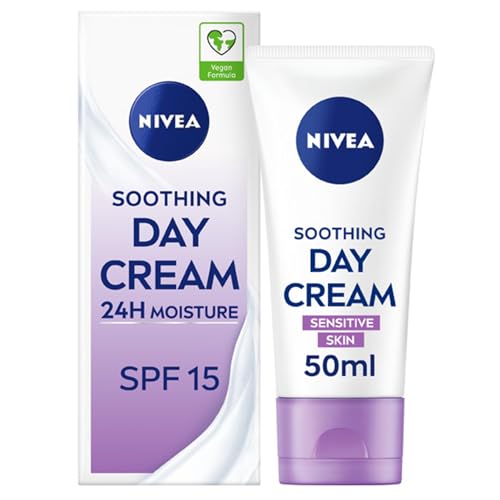
Nivea
Sensitive Day Cream
sunscreen · 50 ml · 23 ingredients
- Fragrance-free
- No essential oils
- With glycerin
- With panthenol
- With piroctone olamine

CeraVe
AM Facial Moisturising Lotion SPF30
sunscreen · 52 ml · 36 ingredients
- Fragrance-free
- No essential oils
- With ceramides
- With niacinamide
- With hyaluronic acid

CeraVe
Am SPF Face Moisturiser
sunscreen · 52 ml · 40 ingredients
- Fragrance-free
- No essential oils
- With ceramides
- With niacinamide
- With hyaluronic acid
Bondi Sands
Fragrance Free Face Sunscreen Lotion SPF 50
sunscreen · 75 ml · 21 ingredients
- Fragrance-free
- No essential oils
- With vitamin e
- With aloe vera
Frequently asked questions
How often should I reapply sunscreen in 2026?
The recommendation has not changed: every two hours of outdoor sun exposure, and immediately after swimming or sweating. This is the consistent guidance from the AAD, the Skin Cancer Foundation, and the FDA. Higher SPF values do not extend the reapplication interval — SPF describes protection intensity at a single point in time, not duration of protection. Set a timer if you are outdoors for extended periods.
Can SPF powder replace my morning sunscreen?
No. SPF powder provides meaningful reapplication support during the day, but the brushed-on film it produces cannot match the even continuous film of a correctly applied liquid or cream sunscreen base. Use a dedicated SPF 30+ liquid or cream formula as your morning base (at least ¼ tsp for the face), then use the powder to reapply over makeup throughout the day.
Does SPF mist work over makeup?
Yes, when applied correctly. Spray 6–8 inches from the face in a sweeping motion, allow the mist to land without rubbing, and optionally press with a clean sponge to set. Rubbing the mist in disrupts underlying makeup and can leave coverage gaps. The limitation is that SPF mists are harder to apply with the even distribution of a powder brush, making complete coverage less reliable if technique is poor.
Do I need to reapply sunscreen if I'm indoors all day?
If you are indoors without UV-transmitting windows and not going outside, you do not need to reapply. However, UVA rays penetrate most standard glass — including office windows — so if you sit near a window for extended periods, a morning application of SPF 30+ is still worthwhile and reapplication is advisable during long window-side sessions. UVB does not penetrate glass, so the skin cancer and burn risk is lower indoors, but photoaging from UVA continues.
Does my SPF foundation mean I don't need a separate sunscreen?
No. The SPF in foundation is only as effective as the film you apply — and to reach the labeled SPF of most foundations, you would need to apply far more than a typical makeup application. Foundation is applied in thin, aesthetic layers; sunscreen requires an even film at a specific dose. Apply a dedicated SPF base first, then apply foundation on top. Think of SPF foundation as a bonus layer, not a replacement.
Sources
- 01How to Apply Sunscreen — AAD Patient Education — American Academy of Dermatology (aad.org). AAD recommends applying sunscreen 15 minutes before sun exposure; 1 oz for the body, 1 tsp for the face; reapply every two hours and after swimming or sweating; most people apply only 25–50% of the recommended dose.
- 025 Common Sunscreen Mistakes — AAD — American Academy of Dermatology (aad.org). Common mistakes include using insufficient amounts (25–50% of needed dose), skipping cloudy days (up to 80% of UV rays penetrate clouds), not reapplying, and using expired product; up to 85% of sunscreen can be removed by towel-drying.
- 03Making Your Sunscreen Work With Your Makeup — The Skin Cancer Foundation (skincancer.org). SPF setting powders and SPF sprays are recommended for reapplying sunscreen over makeup; layering multiple SPF products does not compound the SPF value; finishing powders with SPF aid reapplication without disturbing the makeup base.
- 04Update on Photoprotection — PMC — PubMed Central / Dermatologic Therapy. SPF is defined as the ratio of UV energy needed to cause erythema on protected vs. unprotected skin; reapplication every two hours is required because sunscreen degrades under UV, sweat, and physical contact; high-SPF number does not extend protection duration.