Best Moisturizer for Oily Skin (Non-Comedogenic)
The short answer
The best moisturizer for oily skin is a lightweight, oil-free gel or fluid with glycerin.
Does Oily Skin Need a Moisturizer?
Yes — unambiguously. This is one of the most clinically important and most commonly misunderstood questions in oily skin care.
Sebum is a surface lipid secreted by sebaceous glands. Skin hydration refers to the water content of the stratum corneum and epidermis. These are entirely separate physiological variables. An oily surface does not mean the epidermis is well-hydrated. Skipping moisturizer in an effort to reduce oiliness disrupts the skin barrier, increases transepidermal water loss (TEWL), and often triggers a compensatory increase in sebum production — the opposite of the intended effect.
The solution is not whether to moisturize, but what to moisturize with.
What to Look for: The Ingredient Framework
Humectants — The Core of an Oily-Skin Moisturizer
Humectants are water-binding molecules that draw moisture from the environment and from deeper skin layers into the stratum corneum. They add hydration without any occlusive film, making them the cleanest option for oily skin.
Glycerin Glycerin is a small, water-soluble polyol and the most universally effective humectant in skincare. It is naturally present in healthy skin and has robust safety data. More than half of commercial moisturizer products contain glycerin as a primary moisturizing agent per a PMC review of moisturizer constituents. It is not comedogenic, not acnegenic, and not sensitizing.
Hyaluronic Acid (HA) Hyaluronic acid is a naturally occurring glycosaminoglycan found throughout the dermis; the skin holds approximately 50% of the body's total HA. Topically applied HA functions as a powerful humectant — a 2023 PMC review confirmed significant improvements in skin hydration, moisture retention, and elasticity with topical HA serums. It is inherently non-comedogenic, non-occlusive, and compatible with all skin types.
Key formulation note: high-molecular-weight HA primarily hydrates the stratum corneum surface; multi-weight HA formulas (combining low and high molecular weight fractions) deliver hydration at greater depths. Either is effective and safe for oily skin.
Sodium Hyaluronate The sodium salt form of HA with a smaller molecular weight; penetrates more readily. Functionally similar to HA in moisturizers; equally non-comedogenic.
Sodium PCA The sodium salt of pyrrolidone carboxylic acid — a natural component of the skin's own natural moisturizing factor (NMF). Highly effective humectant with excellent tolerability.
Non-Comedogenic Emollients
Emollients soften and smooth the skin by filling gaps in the stratum corneum. The challenge for oily skin is that many traditional emollients are fatty acids and oils — which can block follicles. The following are validated as non-comedogenic alternatives.
Dimethicone Dimethicone is a silicone-based emollient and the second most common moisturizer active ingredient after petrolatum. It is hypoallergenic, non-comedogenic, non-acnegenic, and reduces TEWL without producing a greasy feel — validated suitable for acne-prone and sensitive patients in the peer-reviewed literature. It provides both occlusive and emollient properties at a skin-friendly level of occlusion (significantly less than petrolatum). Look for it in gel moisturizers where it contributes a silky texture.
Squalane (plant-derived) Squalane is the hydrogenated, stable form of squalene — a natural component of human sebum. It is a lightweight emollient with a dry oil feel and is widely considered non-comedogenic. While its presence in sebum might seem counterintuitive for oily skin, squalane has a small molecular size, does not build up in follicles, and has barrier-supporting properties. The evidence on its comedogenicity is generally favorable, though individuals with very congestion-prone skin may want to patch-test.
Ceramides Ceramides are the primary lipid component of the intercellular lamellar bodies in the stratum corneum. They do not cause breakouts and play a key role in barrier integrity. A ceramide-containing moisturizer is appropriate for oily skin — especially for those using salicylic acid or retinol, which can temporarily compromise the barrier.
Actives That Earn Their Place in an Oily-Skin Moisturizer
Niacinamide (2–5%) Niacinamide in a moisturizer offers two simultaneous benefits for oily skin. First, it is a barrier-strengthening active that increases ceramide synthesis. Second, clinical trials confirm it reduces sebum excretion rate at 2% concentration — with in vitro evidence of a dose-dependent reduction in sebaceous lipid output. A moisturizer with 4–5% niacinamide provides meaningful sebum-modulating benefit while covering the hydration step.
Zinc (often as zinc PCA or zinc gluconate) Zinc is a sebostatic mineral with anti-inflammatory properties. Often combined with niacinamide in formulas targeting oily and acne-prone skin. The combination of niacinamide + zinc has become a benchmark oily-skin active pairing.
Salicylic Acid (0.5–1% in a moisturizer) Some moisturizers formulated for oily skin include a low concentration of salicylic acid. At 0.5–1%, it provides a gentle ongoing keratolytic effect without the intensity of a dedicated BHA treatment. This is appropriate as a maintenance moisturizer for people who are not already using a separate salicylic acid serum.
Ingredients to Avoid
This is where the selection process becomes straightforward: any moisturizer containing the following should be set aside for oily, congestion-prone skin.
| Ingredient | Why It's Problematic |
|---|---|
| Coconut oil | High comedogenicity rating; widely documented to block pores in acne-prone individuals |
| Isopropyl myristate | Well-studied comedogen; found to produce follicular hyperkeratosis in rabbit ear assays |
| Shea butter | Heavy, occlusive; comedogenicity varies but generally too rich for oily skin |
| Cocoa butter | Rich in oleic acid; high comedogenicity |
| Lanolin | Highly occlusive; documented to cause allergic contact dermatitis and can trap sebum |
| Petrolatum (as a primary ingredient) | Too occlusive for oily skin; excellent for barrier repair in very dry skin but inappropriate here |
| Mineral oil (heavy concentration) | Occlusive; documented comedogenicity concerns |
| Fragrances / parfum | No moisturizing function; a documented sensitizer; excluded from all oily-skin and acne-prone formulas |
Formulation Formats: What to Choose
| Format | Suitability for Oily Skin | Notes |
|---|---|---|
| Gel moisturizer | Excellent | Water-based; non-greasy; ideal texture |
| Gel-cream | Good | Slightly richer than gel; fine if oil-free |
| Fluid / lotion | Good | Lightweight; ensure no heavy oils in ingredients |
| Cream | Moderate | Only if labeled oil-free and free of comedogenic ingredients |
| Balm / salve | Poor | Typically too occlusive; traps sebum |
| Oil or facial oil | Poor | Adds to surface lipid load; most are comedogenic |
The ideal moisturizer for oily skin absorbs quickly, leaves no visible film after 60 seconds, and produces no shine of its own. If you apply your moisturizer and your face looks greasy immediately, the formulation is wrong for your skin type.
How to Apply
Apply a pea-sized to dime-sized amount (you need less than you think — gel moisturizers are highly concentrated) to slightly damp skin after your serums. Pressing or patting the product in rather than rubbing minimizes surface disruption. Allow it to fully absorb (60–90 seconds) before applying sunscreen in the morning.
At night, apply the same moisturizer or a slightly richer but still oil-free gel-cream after actives (retinol or niacinamide). A heavy night cream is not warranted for oily skin.
How to Test if a Moisturizer Is Right for You
- Check the ingredient list first using the framework above. Reject anything with the flagged comedogenic ingredients before applying to your face.
- Patch-test on the inner arm for 24–48 hours to rule out contact allergy.
- Apply to one side of the face only for one week before using full-face. If no breakouts appear and the skin feels hydrated but not greasy, proceed full-face.
- Give it 4 weeks. Congestion from a comedogenic product can take 4–6 weeks to manifest. Track your skin over a full monthly cycle.
A good oily-skin moisturizer should not cause new breakouts, should absorb within 60–90 seconds, and should leave the skin feeling supple — not tight, not greasy.
Our picks: the best moisturizers for oily skin
Picked by code from each product's full ingredient list.
 1
Catrice
Hydro Supercharged Serum
moisturizer · 30 ml · 11 ingredients
- Fragrance-free
- No essential oils
- With niacinamide
- With hyaluronic acid
 2
Catrice
Lazy Day All In One Serum
moisturizer · 28 ml · 23 ingredients
- Fragrance-free
- No essential oils
- With niacinamide
- With hyaluronic acid
 3
Caudalie
Vinoperfect Dark Spot Niacinamide Moisturizer
moisturizer · 50 ml · 29 ingredients
- Fragrance-free
- No essential oils
- With niacinamide
- With hyaluronic acid
 4
CeraVe
Hydrating Hyaluronic Acid Water Gel
moisturizer · 48 g · 31 ingredients
- Fragrance-free
- No essential oils
- With niacinamide
- With hyaluronic acid
 5
Anua
PDRN Hyaluronic Acid 100 Moisturizing Cream
moisturizer · 60 ml · 48 ingredients
- Fragrance-free
- No essential oils
- With niacinamide
- With hyaluronic acid
 6
Anua
Peach 77% Niacin
moisturizer · 50 ml · 39 ingredients
- No essential oils
- With niacinamide
- With hyaluronic acid
 7
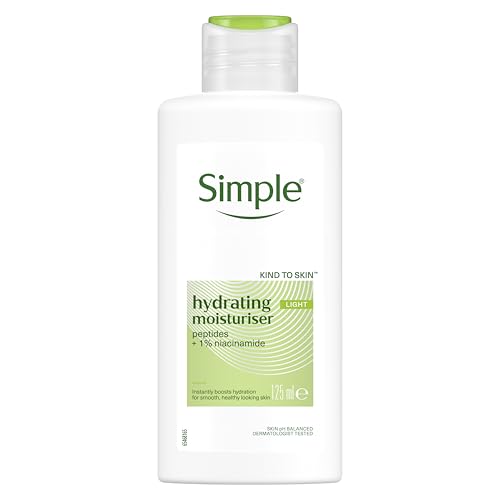
Simple
Hydrating Light Moisturiser
moisturizer · 125 ml · 30 ingredients
- Fragrance-free
- No essential oils
- With niacinamide
 8
Vichy
Liftactiv Collagen Specialist 16 Bonding Serum
moisturizer · 1 ml · 33 ingredients
- No essential oils
- With niacinamide
- With hyaluronic acid
Frequently asked questions
Is gel moisturizer actually effective, or is it too light for real hydration?
Gel moisturizers are genuinely effective at hydrating oily skin — they are not watered-down versions of 'real' moisturizers. The misconception comes from equating moisture with heaviness. Gel moisturizers rely on humectants (glycerin, hyaluronic acid) which actively draw water into the skin layers. Clinical studies of topical hyaluronic acid in gel formulations confirm significant improvements in skin hydration measured by corneometry — the same equipment used to measure dry skin hydration. What gels lack is heavy occlusion, which is exactly what oily skin does not need.
Can I use the same moisturizer for oily skin in the morning and at night?
Yes — for most people with oily skin, using the same lightweight gel moisturizer morning and evening is entirely appropriate. A heavier night cream is not biologically necessary for oily skin. If your skin has been through a salicylic acid or retinol treatment at night and feels more sensitized, you might want a slightly richer gel-cream at night (still oil-free), but the same morning formula is a reasonable starting point.
Does hyaluronic acid cause oily skin to produce more oil?
No. Hyaluronic acid is a humectant — it draws water into the skin, not oil. It has no mechanism to stimulate sebaceous gland activity. Some people confuse the initial dewy finish after applying HA with oiliness; the two feel different. HA hydration absorbs and normalizes within minutes; sebum has a distinct, heavier feel. Hyaluronic acid is consistently recommended for oily skin precisely because it is non-comedogenic, non-occlusive, and does not interact with sebum production.
What ingredients make a moisturizer non-comedogenic?
No single ingredient makes a moisturizer 'non-comedogenic' — it is a property of the complete formulation. The term is not FDA-regulated, so it is a manufacturer claim. However, formulations built on humectants (glycerin, hyaluronic acid) and non-comedogenic emollients (dimethicone, squalane, ceramides) — and free of coconut oil, isopropyl myristate, shea butter, and heavy waxes — are far less likely to trigger congestion. The cleanest approach is to read the ingredient list using the framework above rather than relying solely on the non-comedogenic label.
Should I use a mattifying moisturizer if I have oily skin?
Mattifying moisturizers use sebum-absorbing ingredients like silica, starch, or kaolin clay to reduce shine immediately after application. They are cosmetically useful — the mattifying effect can last 2–6 hours — but the underlying ingredients must still be non-comedogenic. Read the full ingredient list regardless of a 'mattifying' claim; some mattifying products contain silicones that are fine, but others contain heavy waxes that are not appropriate for oily skin. Mattifying moisturizers are a lifestyle convenience, not a clinical treatment for oiliness.
Sources
- 01Moisturizers for Acne: What are their Constituents? — PubMed Central / Journal of Clinical and Aesthetic Dermatology, 2014-05-01. Dimethicone is non-comedogenic, non-acnegenic, and hypoallergenic — validated suitable for oily and acne-prone skin; glycerin is the most common moisturizer active; coconut oil, mineral oil, and lanolin carry comedogenicity risk.
- 02Moisturizer in Patients with Inflammatory Skin Diseases — PubMed Central / International Journal of Molecular Sciences, 2022-07-01. Silicone-based derivatives (dimethicone, cyclomethicone) are particularly suitable for oily skin; facial moisturizers are designed to be nongreasy and noncomedogenic.
- 03Benefits of topical hyaluronic acid for skin quality and signs of skin aging — PubMed Central / Dermatology and Therapy, 2023-04-01. Topical hyaluronic acid significantly improves skin hydration measured by corneometry; non-comedogenic humectant suitable for all skin types.
- 04The effect of 2% niacinamide on facial sebum production — PubMed / Journal of Cosmetic and Laser Therapy, 2006-01-01. 2% topical niacinamide reduced sebum excretion rate in controlled studies; in vitro study showed dose-dependent reduction in sebaceous lipid components.
- 05How to pick the right moisturizer for your skin — AAD — American Academy of Dermatology (aad.org). AAD recommends oil-free, noncomedogenic moisturizers for oily and acne-prone skin; avoiding oils, waxes, and shea butter.
- 06What To Look for in Daytime and Nighttime Facial Creams — Cleveland Clinic Health Essentials. For oily/acne-prone skin, avoid oils, waxes, and petrolatum; avoid shea butter, jojoba oil, cocoa butter, and coconut oil; choose non-comedogenic formulas.