Niacinamide & Vitamin C Together: Myth vs. Reality
The short answer
Niacinamide and vitamin C are safe together — the 'cancel out' rule is a myth.
Where Did the Myth Come From?
If you have ever been told not to layer niacinamide and vitamin C, the warning traces back not to a clinical dermatology study but to a chain of pharmaceutical chemistry papers published between 1944 and 1963.
The most-cited is Guttman and Brooke's 1963 paper in the Journal of Pharmaceutical Sciences, which showed that niacinamide (nicotinamide) and ascorbic acid form a reversible charge-transfer complex in aqueous solution, producing a yellow color. Complex formation peaked at pH 3.8 — a highly acidic environment approximated by some pure L-ascorbic acid serums, but not representative of most modern formulations or of the skin surface itself.
What that paper did not show: skin flushing, conversion to free nicotinic acid (niacin), or any adverse skin effect. It was a solution-chemistry study conducted at controlled temperatures, not a dermatology or cosmetic stability trial. The flushing narrative was extrapolated later — and amplified by brand marketing that found it commercially convenient to discourage combining.
Earlier work by Bailey, Bright, and Jasper (1945) and Wenner (1949) similarly studied complex formation and synthetic chemistry, not skincare safety. None of these researchers were measuring what happens when someone layers two serums on their face.
What the Science Actually Tells Us
The charge-transfer complex dissolves on your skin
The Guttman-Brooke complex forms maximally at pH ~3.8. At skin pH (~5.0–5.5) — which is where any product ends up after absorption — the complex breaks down. Even if two separate products at very different pH levels momentarily interact on your skin, that interaction reverses as the pH rises toward neutral. It does not accumulate, and it does not produce free niacin in clinically relevant amounts.
Niacinamide is also chemically stable: it resists hydrolysis to nicotinic acid across a wide temperature range and is stable even above 100 °C in most conditions. The trace conversion that might occur at cosmetic concentrations and room temperature is orders of magnitude below any threshold associated with flushing.
Niacinamide ≠ niacin — and the distinction matters
The flush response is caused by nicotinic acid (niacin), which triggers prostaglandin-mediated vasodilation. Niacinamide (nicotinamide) is its amide cousin — same family, different molecule, no flush. DermNet NZ states plainly: niacinamide "does not cause flushing or gastrointestinal upset, unlike its precursor nicotinic acid." Topical niacinamide in cosmetic products does not behave like oral niacin.
The one real concern: photodegradation
A 2018 kinetic study by Ahmad et al. in the Journal of Photochemistry and Photobiology B found that niacinamide acts as an electron acceptor and approximately doubles the rate at which ascorbic acid degrades when exposed to light. A 2011 companion study confirmed the effect in cream formulations.
This is a genuine formulation concern — but it applies to a combined product stored in a clear bottle in light, not to layering two separate products on your skin in sequence. If your vitamin C serum is well-packaged (opaque, UV-resistant) and you apply it before niacinamide rather than blending them in a pot on your shelf, this issue is irrelevant to your routine.
How to Use Both
For the vast majority of people, using niacinamide and vitamin C in the same routine — even back to back — is safe and unremarkable. Here is the most practical approach:
Option A — Same routine (fine for most): Apply your vitamin C serum to clean skin first. Allow 30–60 seconds for it to absorb. Follow with your niacinamide product. The brief layering gap is a habit worth keeping, since it respects each product's pH preferences — vitamin C performs best at lower pH before the skin neutralizes it.
Option B — Split AM/PM (belt-and-suspenders): Use vitamin C in the morning (where its antioxidant protection pairs well with SPF) and niacinamide at night. This entirely removes any theoretical interaction and is useful if you are sensitive or using a high-concentration L-ascorbic acid formula at pH below 3.5.
Both approaches work. Option A is not meaningfully riskier than Option B — it is a matter of preference.
The Complementary Benefits
The more interesting story is not the compatibility question but what you gain by using both.
Pigmentation — additive, different mechanisms: Vitamin C (ascorbic acid) inhibits tyrosinase, the enzyme that converts tyrosine to melanin — blocking production at the source. Niacinamide inhibits the transfer of melanosomes (melanin packets) from melanocytes into surrounding keratinocytes — blocking delivery to the surface. They work at different steps in the same pathway. That means stacking them targets hyperpigmentation more comprehensively than either can alone.
Antioxidant coverage: Vitamin C is a primary antioxidant — it directly neutralizes free radicals. Niacinamide contributes indirectly by reinforcing the skin barrier and reducing chronic low-grade inflammation that generates oxidative stress. Complementary, not redundant.
Barrier and tolerance: Niacinamide boosts ceramide synthesis and reduces transepidermal water loss. For anyone using a low-pH vitamin C serum — which can transiently disrupt the barrier — niacinamide applied afterward provides direct structural support.
Collagen context: Vitamin C is a required cofactor for collagen crosslinking via prolyl and lysyl hydroxylase enzymes; without it, procollagen cannot form correctly. Niacinamide supports collagen indirectly via barrier improvement and oxidative stress reduction. Together they cover both the direct synthesis pathway and the environmental defense around it.
The Verdict
The 'don't mix niacinamide and vitamin C' rule is not supported by dermatological or clinical evidence. It comes from pharmaceutical bench chemistry done decades before modern cosmetic formulation science, and it has been repeated and amplified without rigorous scrutiny.
The one real consideration — photodegradation of ascorbic acid — is a formulation and storage issue, not a routine-stacking issue. Cleveland Clinic explicitly recommends pairing niacinamide with vitamin C to maximize brightening results. DermNet NZ endorses both as treatments for post-inflammatory hyperpigmentation.
Use both. Apply vitamin C first, let it settle, follow with niacinamide. You will get the benefits of two complementary actives working on the same skin concerns from different angles — which is exactly what smart ingredient stacking looks like.
Products that fit: dark spots and uneven tone
Picked by code from each product's full ingredient list.
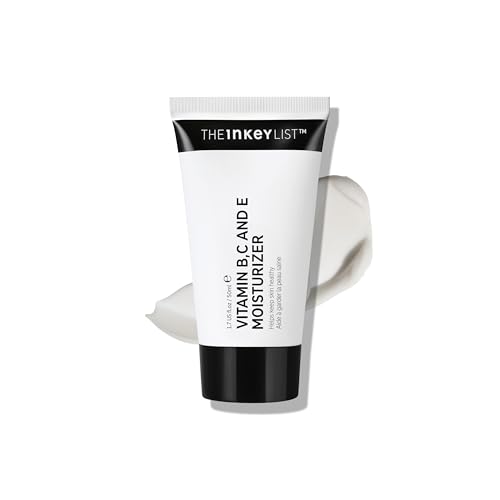
The Inkey List
Vitamin B
moisturizer · 50 ml · 22 ingredients
- Fragrance-free
- No essential oils
- With vitamin c
- With niacinamide

Anua
Peach 70 Niacinamide Serum
serum · 30 ml · 45 ingredients
- No essential oils
- With vitamin c
- With niacinamide
- With alpha arbutin
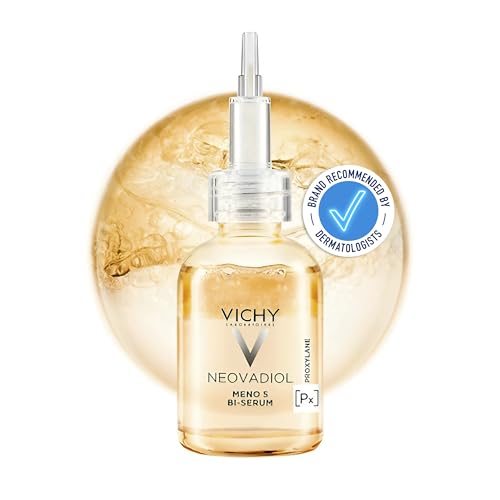
Vichy
Neovadiol Meno 5 Bi-Serum
serum · 2.4 l · 23 ingredients
- No essential oils
- With vitamin c
- With niacinamide
- With glycolic acid
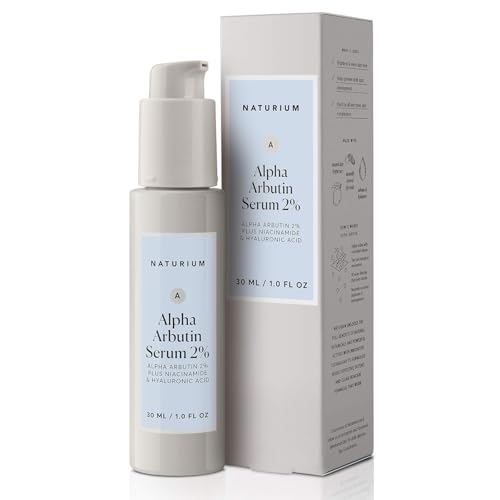
Naturium
Alpha Arbutin Serum 2%
serum · 30 ml · 20 ingredients
- Fragrance-free
- No essential oils
- With niacinamide
- With alpha arbutin
Frequently asked questions
Is it still safe to use niacinamide and vitamin C together in 2026?
Yes — and that answer has not changed in years. No new evidence has emerged to support the incompatibility claim. Dermatologists, cosmetic chemists, and clinical sources including Cleveland Clinic and DermNet NZ confirm that layering the two is safe and can improve brightening outcomes. The myth persists online, but it has no credible clinical backing.
Does mixing niacinamide and vitamin C actually cause skin flushing?
In real-world skincare routines, no. The flushing concern involves nicotinic acid (niacin) — a different molecule from niacinamide. For niacinamide to cause flushing, it would need to hydrolyse into niacin. Under cosmetic-use conditions (room temperature, pH 5–7), this conversion is negligible. The 1960s studies that introduced this idea used pure pharmaceutical-grade solutions at non-cosmetic pH and temperature — not a representation of layering two serums on your face.
Will niacinamide make my vitamin C less effective?
The evidence says no — at least not in a meaningful way for most people. The charge-transfer complex that forms between the two molecules is reversible and dissipates at skin pH. The one documented interaction (niacinamide accelerating ascorbic acid photodegradation) affects combined products in clear packaging exposed to light — not a sequence-applied routine. If your vitamin C is well-formulated and packaged, its efficacy is not meaningfully compromised by niacinamide.
Should I use vitamin C in the morning and niacinamide at night?
That is one valid approach, but it is not required. Vitamin C suits the morning well because its antioxidant action pairs with SPF against UV- and pollution-generated free radicals. Niacinamide works any time of day with no photosensitivity concern. If you prefer the simplicity of splitting them, AM vitamin C and PM niacinamide is a sensible routine. But layering both in the same session — vitamin C first, then niacinamide — is equally effective and safe for most people.
What about vitamin C derivatives like ascorbyl glucoside — do they react with niacinamide too?
Even less so. Stabilized vitamin C derivatives (ascorbyl glucoside, sodium ascorbyl phosphate, magnesium ascorbyl phosphate, 3-O-ethyl ascorbic acid) are formulated at higher pH than pure L-ascorbic acid, sit closer to neutral, and are inherently more stable. The charge-transfer complex described in the original studies forms most readily with pure ascorbic acid at low pH. If you are using a stabilized derivative, the theoretical interaction is even smaller than it is with L-ascorbic acid at pH 3.5.
Is there any skin type that should avoid combining niacinamide and vitamin C?
No skin type has a clinical reason to avoid this combination. Very sensitive or rosacea-prone skin may want to patch-test both ingredients individually before layering, but that caution applies to any active — not to this specific combination. If your skin reacts to a high-concentration niacinamide product (10%+), reduce the concentration; that sensitivity is to the dose of niacinamide, not to the pairing with vitamin C.
Sources
- 01Nicotinamide — DermNet NZ — DermNet NZ, 2023-01-01. Niacinamide does not cause flushing or gastrointestinal upset, unlike nicotinic acid; supports barrier, sebum, and hyperpigmentation benefits.
- 02Niacinamide — Cleveland Clinic — Cleveland Clinic, 2024-01-01. Cleveland Clinic recommends pairing niacinamide with vitamin C and other antioxidants to maximize skin benefits.
- 03Topical Vitamin C — DermNet NZ — DermNet NZ, 2023-01-01. Ascorbic acid formulation stability context; pH and packaging requirements for maintaining vitamin C efficacy.
- 04Photochemical interaction of ascorbic acid and nicotinamide in aqueous solution: A kinetic study — Journal of Photochemistry and Photobiology B: Biology, 2018-05-01. Niacinamide acts as an electron acceptor and approximately doubles the photodegradation rate of ascorbic acid — a formulation and packaging concern, not a routine-stacking concern.
- 05Solution phase interaction of nicotinamide with ascorbic acid (Guttman & Brooke 1963) — Journal of Pharmaceutical Sciences / Wiley, 1963-10-01. The original paper showing a reversible charge-transfer complex between nicotinamide and ascorbic acid peaking at pH 3.8 — a pharmaceutical chemistry study, not a skin safety or dermatology study.
- 06Post-inflammatory Hyperpigmentation — DermNet NZ — DermNet NZ, 2023-01-01. Both topical vitamin C and niacinamide are listed as effective treatments for post-inflammatory hyperpigmentation, operating via different mechanisms.