Retinol: The Complete Guide to Vitamin A in Skincare
The short answer
Retinol is an OTC vitamin A derivative proven to reduce wrinkles, improve skin texture.
What Is Retinol?
Retinol is a vitamin A alcohol — the most widely used over-the-counter (OTC) retinoid in skincare. It sits in the middle of the retinoid potency ladder: stronger than retinyl esters but weaker than retinaldehyde, and substantially weaker than prescription all-trans retinoic acid (tretinoin).
Retinoids split into two categories: OTC cosmeceuticals (retinyl esters → retinol → retinaldehyde) and prescription-only drugs (adapalene, tretinoin, tazarotene, trifarotene). Retinol is inactive as applied — its activity depends entirely on enzymatic conversion inside the skin, which is also why it is better tolerated than tretinoin.
How Retinol Works: The Mechanism
After absorption through the stratum corneum, retinol is sequentially oxidized by skin-resident enzymes:
Retinol → Retinaldehyde → All-trans retinoic acid (ATRA)
This two-step conversion occurs primarily in keratinocytes. Once formed, retinoic acid binds to nuclear retinoic acid receptors (RAR-α, RAR-β, RAR-γ), which heterodimerize with retinoid X receptors (RXR) and bind to retinoic acid response elements (RAREs) in gene promoters. The downstream effects are broad:
- Epidermal renewal: Accelerates keratinocyte proliferation and desquamation, increasing cell turnover and thinning the dead stratum corneum while thickening the living epidermis.
- Collagen synthesis: Activates dermal fibroblasts and upregulates the TGF-β/CTGF pathway, increasing Type I collagen, fibronectin, and tropoelastin.
- MMP suppression: Inhibits matrix metalloproteinases (MMP-1 and MMP-8), the collagen-degrading enzymes that UV exposure upregulates. This simultaneously reduces collagen breakdown.
- Pigmentation: Inhibits tyrosinase activity and disperses melanin granules, reducing hyperpigmentation.
- Vascularity: Stimulates endothelial cell proliferation, which explains the mild "glow" some users notice — increased dermal blood vessel density.
Because conversion to retinoic acid is regulated by keratinocyte differentiation state, retinol delivers a controlled, lower-peak ATRA concentration than topical tretinoin at equivalent percentages. Retinol is widely characterized as substantially less potent than tretinoin — commonly cited as roughly an order of magnitude — which also explains its superior tolerability. Some protocols report 0.4% retinol augmenting collagen deposition, suggesting the conversion-controlled delivery has advantages in collagen matrix remodeling.
What Retinol Treats
The evidence base, accumulated over more than three decades of controlled trials, covers:
Photoaging and Fine Lines
This is where retinol's evidence is strongest. UV radiation suppresses collagen synthesis and elevates MMPs, producing the wrinkles, laxity, and uneven pigmentation of photoaged skin. Retinol reverses these histological changes — increasing epidermal thickness, restoring fibrillin deposition, and rebuilding collagen architecture. A 2025 review in International Journal of Cosmetic Science (Wiley) confirmed that OTC retinoids produce positive remodeling of epidermal and dermal structure at concentrations achievable without prescription. Pigmentation irregularity — post-inflammatory hyperpigmentation, mild melasma — responds to retinol's anti-tyrosinase and melanin-dispersal effects over 12–24 weeks.
Acne
Retinol prevents microcomedo formation — the precursor to every acne lesion — by normalizing follicular keratinization. The AAD's 2024 guidelines give topical retinoids a strong recommendation as first-line acne therapy. The mechanism is shared across the retinoid class; OTC retinol is a practical entry point for mild comedonal acne. Retinol also visually reduces pore appearance by clearing keratinous plugs, though it does not change physical pore diameter.
Retinol vs. Retinaldehyde vs. Tretinoin
| Form | Steps to ATRA | Relative Potency | Availability |
|---|---|---|---|
| Retinyl ester | 3 | Lowest | OTC |
| Retinol | 2 | Low–moderate | OTC (0.025%–1%) |
| Retinaldehyde (retinal) | 1 | ~10× retinol at equal % | OTC |
| Tretinoin (ATRA) | 0 (already active) | Gold standard | Prescription only |
| Tazarotene | — (synthetic, RAR-selective) | Highest | Prescription only |
Retinaldehyde deserves specific mention: one enzymatic step closer to ATRA than retinol, it delivers faster, more pronounced results while published head-to-head data show equivalent irritation to retinol — making it the strongest sensible OTC choice. Studies at 0.1% applied daily for 8 weeks showed efficacy comparable to a glycolic acid chemical peel for skin renewal.
Tretinoin has the deepest biopsy-confirmed collagen-density data of any topical retinoid, including a landmark 1993 New England Journal of Medicine controlled trial demonstrating measurable collagen reversal in photodamaged skin. It requires a prescription. Full clinical protocol comparison lives on the Retinol vs. Tretinoin page.
Retinol Strengths: Which Concentration to Start
OTC retinol products range from approximately 0.025% to 1%. There is no FDA labeling requirement to disclose concentration, but most reputable brands state it.
Key clinical insight: a 2025 review found that 0.3% retinol was equally efficacious as 1% for positive epidermal and dermal remodeling, with substantially better tolerability. Higher concentrations do not linearly improve outcomes once threshold receptor saturation is reached.
Practical starting point by skin type:
- Retinol-naive / sensitive skin: 0.025%–0.1%, every other night
- Previously tolerated retinol, no sensitivity: 0.1%–0.3%, every other night building to nightly
- Experienced user, seeking progression: 0.3%–0.5% nightly, then consider retinaldehyde or discuss tretinoin with a dermatologist
How to Use Retinol
The Core Rules
- PM only. Retinol degrades in UV light and increases photosensitivity. Apply at night; use SPF 30+ every morning.
- Start low and slow. Begin 2–3 nights per week, increase to nightly over 4–8 weeks. Daily use from day one is the most common cause of unnecessary irritation.
- Pea-sized amount for the full face. More product means more irritation, not faster results.
- Dry skin only. Apply to fully dry skin (5–10 minutes post-cleanse); damp skin amplifies penetration and irritation.
The Sandwich Method
For sensitive skin or retinoid newcomers: apply moisturizer first, then retinol, then moisturizer on top. This "sustained-release buffer" slows absorption and reduces peak irritation without meaningfully reducing long-term efficacy. The buffer method — moisturizer beneath only — is a lighter variant for moderate sensitivity.
Interactions to Avoid on the Same Night
- AHAs/BHAs (glycolic, salicylic acid): use on alternate nights; concurrent use compounds barrier disruption.
- Benzoyl peroxide: oxidizes and inactivates retinol; separate to alternate nights or use BP in the morning.
- Vitamin C (L-ascorbic acid): potential pH incompatibility; use in the morning, retinol at night.
Daily SPF 30+ every morning is non-negotiable. Retinol temporarily reduces the protective stratum corneum; UV exposure reverses anti-aging gains and risks hyperpigmentation.
The Purge (Retinization): What to Expect
In the first 2–6 weeks, many users experience a cluster of breakouts and flaking. This is retinization — the acceleration of the skin's natural cell cycle that forces congestion and microcomedones to surface simultaneously. It is not retinol creating new problems; it is clearing a backlog faster than normal.
How to distinguish purging from a genuine reaction:
| Purging | True breakout / reaction | |
|---|---|---|
| Timing | Weeks 2–6 after starting | Can occur at any point |
| Duration | Resolves within 4–6 weeks | Persists beyond 8 weeks |
| Lesion type | Small whiteheads/blackheads in usual breakout zones | Deep cysts, or lesions in new areas |
| Accompanying signs | Mild dryness, flaking | Burning, hives, swelling |
If skin has not improved by week 12, or if you experience burning, hives, or swelling at any point, stop and see a dermatologist.
Timeline for Results
Retinol is not a rapid fix. Research-supported timelines:
- Weeks 1–4: Increased cell turnover, possible purge, mild dryness. Skin may look temporarily worse.
- Weeks 4–8: Retinization settles. Texture begins to improve. Pores appear cleaner.
- Weeks 8–12: Tone and fine surface lines noticeably improved in most users.
- Weeks 12–24: Deeper wrinkle reduction and measurable collagen remodeling. Most studies measure primary outcomes at 24 weeks.
- 6–12 months: Continued and compounding improvement in dermal thickness and collagen architecture.
Consistency over time is the operative variable — missing weeks resets progress.
Side Effects
Common, particularly at the start:
- Dryness and flaking — the most frequent complaint; managed with a good moisturizer and barrier-supporting ingredients (ceramides, hyaluronic acid).
- Redness and irritation — typically transient; reduce frequency or concentration if persistent.
- Increased sun sensitivity — present throughout use; managed with daily SPF.
- Initial acne flare (purge) — expected weeks 2–6.
Less common but possible: contact dermatitis (true allergy to an excipient or the retinol itself) — distinguished from irritation by presentation outside the application zone or with hives.
Who Should Be Cautious or Avoid Retinol
- Pregnancy and breastfeeding: Retinoids are categorically contraindicated in pregnancy. While systemic absorption from topical retinol is low, retinoid teratogenicity is well established as a class effect (oral isotretinoin being the primary concern), and the AAD recommends avoiding all topical retinoids during pregnancy. Switch to an alternative and discuss options with your obstetrician or dermatologist.
- Rosacea: Retinol can exacerbate flushing and barrier disruption. Some dermatologists prescribe very low-concentration retinoids for rosacea under close supervision, but self-starting without guidance is inadvisable.
- Sensitive or compromised skin barrier: Use the sandwich method, start at the lowest available concentration, and allow more time between increments.
- Recent chemical peel, laser, or dermabrasion: Pause retinol use until full healing — typically 1–2 weeks minimum, per your treating clinician's guidance.
- Concurrent prescription retinoid: Using OTC retinol simultaneously with prescription tretinoin is unnecessary and amplifies irritation with no additional benefit.
Products that fit: mature skin
Picked by code from each product's full ingredient list.

Paula's Choice
Clinical 0.3% Retinol & 2% Bakuchiol Treatment
retinol serum · 30 ml · 67 ingredients
- Fragrance-free
- No essential oils
- With retinoids
- With peptides
- With vitamin c
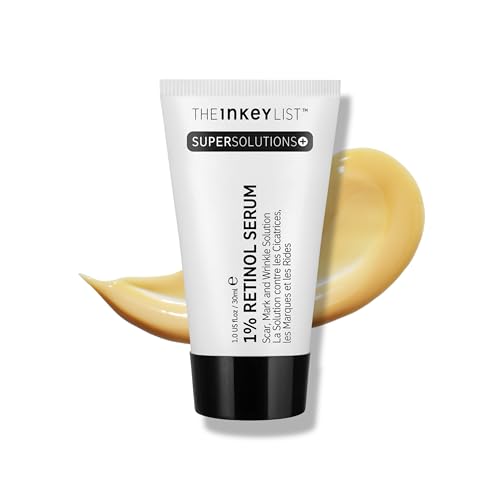
The Inkey List
Retinol Serum
retinol serum · 30 ml · 30 ingredients
- Fragrance-free
- No essential oils
- With retinoids
- With peptides
- With vitamin c

Medik8
r-Retinoate Intense
retinol serum · 50 ml · 68 ingredients
- No essential oils
- With retinoids
- With peptides
- With vitamin c

CeraVe
Skin Renewing Retinol Serum
retinol serum · 30 ml · 39 ingredients
- Fragrance-free
- No essential oils
- With retinoids
- With niacinamide
- With ceramides
Frequently asked questions
Is retinol still recommended in 2026?
Yes — the consensus among dermatologists and regulatory bodies is unchanged. The American Academy of Dermatology maintained its strong recommendation for topical retinoids as first-line acne therapy in its 2024 guideline update, and peer-reviewed reviews published in 2025 in journals including the International Journal of Cosmetic Science (Wiley) and MDPI's Journal of Clinical Medicine continue to characterize retinol as a gold-standard OTC ingredient for photoaging. No new safety signal has emerged that changes the risk–benefit assessment for healthy, non-pregnant adults.
How long before retinol actually works?
Texture and pore clarity typically improve within 8 weeks of consistent use. Measurable fine-line reduction and tone improvement are usually visible by week 12. The most meaningful histological changes — increased dermal collagen density and epidermal thickening — are documented in studies running 24 weeks and beyond. Short-term results look more modest than long-term results; the compound effect of sustained use is the point.
Can I use retinol every night?
Most people can reach nightly use, but starting there is the most common beginner mistake. Begin at 2–3 nights per week for 4–6 weeks, then advance to every other night, then nightly — only if your skin tolerates the previous frequency without persistent redness or peeling. Some people find that 3–4 nights per week is their optimal steady-state and that is a clinically valid and effective routine.
Does retinol thin the skin?
Retinol temporarily thins the outermost dead layer (stratum corneum) while simultaneously thickening the living epidermis and stimulating dermal collagen. The net effect with long-term use is structurally stronger, denser skin — the opposite of thinning. The increased UV sensitivity beginners feel reflects a temporarily reduced stratum corneum, which is why daily SPF is mandatory, not optional.
What percentage of retinol should a beginner start with?
Begin at 0.025%–0.1%. A 2025 review found that 0.3% produces equivalent dermal remodeling outcomes to 1% with meaningfully better tolerability, so there is no benefit to starting at high concentrations. Increase only when the current strength is fully tolerated for at least 4 consecutive weeks.
Can I use retinol with niacinamide?
Yes — niacinamide is one of the most compatible actives to pair with retinol. It strengthens the skin barrier, reduces redness, and helps manage the initial irritation of retinization. There is a long-debunked myth that niacinamide converts retinol into niacin (a flushing compound) — this theoretical reaction does not occur at skin-surface temperatures and pH. The combination is well tolerated and clinically beneficial.
Sources
- 01Human Skin Aging and the Anti-Aging Properties of Retinol — PubMed Central / MDPI Biomolecules, 2023-11-10. Retinol activates fibroblasts, stimulates Type I collagen via TGF-β/CTGF, reduces CCN1, and increases epidermal thickness, with significantly fewer side effects than tretinoin.
- 02Cosmetic retinoid use in photoaged skin: A review of the compounds, their use and mechanisms of action — PubMed Central / International Journal of Cosmetic Science (Wiley), 2025-01-31. 0.3% retinol is equally efficacious to 1% for dermal remodeling; retinaldehyde is more potent than retinol (one fewer conversion step); the retinoid conversion hierarchy (retinyl ester → retinol → retinaldehyde → ATRA) is established; ATRA is prescription-only.
- 03Retinoids in the treatment of skin aging: an overview of clinical efficacy and safety — PubMed Central / Clinical Interventions in Aging, 2006-12-01. Retinol concentrations 0.04%–1% produce measurable benefits in 7 days to 12 weeks; retinol requires enzymatic conversion retinol→retinaldehyde→ATRA; side effects include erythema, scaling, and dryness — significantly less than tretinoin.
- 04Retinoid or retinol? — AAD Patient Education — American Academy of Dermatology (aad.org). AAD recommends starting with the least-intense retinoid, applying at night, using SPF daily, and categorically avoiding retinoids in pregnancy.
- 05Guidelines of care for the management of acne vulgaris (2024 update) — Journal of the American Academy of Dermatology, 2024-01-01. AAD 2024 guidelines give topical retinoids a strong recommendation as first-line acne therapy; improvements typically visible at 12 weeks.
- 06An Updated Review of Topical Tretinoin in Dermatology: From Acne and Photoaging to Skin Cancer — PubMed Central / Journal of Clinical Medicine (MDPI), 2025-11-01. Tretinoin activates RAR-α/β/γ, inhibits MMP-1 and MMP-8, induces collagen synthesis, reduces melanin via tyrosinase inhibition; robust RCT data support use in acne and photoaging.
- 07Restoration of Collagen Formation in Photodamaged Human Skin by Tretinoin (Retinoic Acid) — New England Journal of Medicine, 1993-08-19. Landmark biopsy-controlled trial demonstrating measurable collagen restoration in photodamaged human skin with topical retinoic acid — the foundational clinical evidence underpinning the retinoid anti-aging mechanism.